


Deanery Retreat for Readers and Extraordinary Ministers of the Eucharist
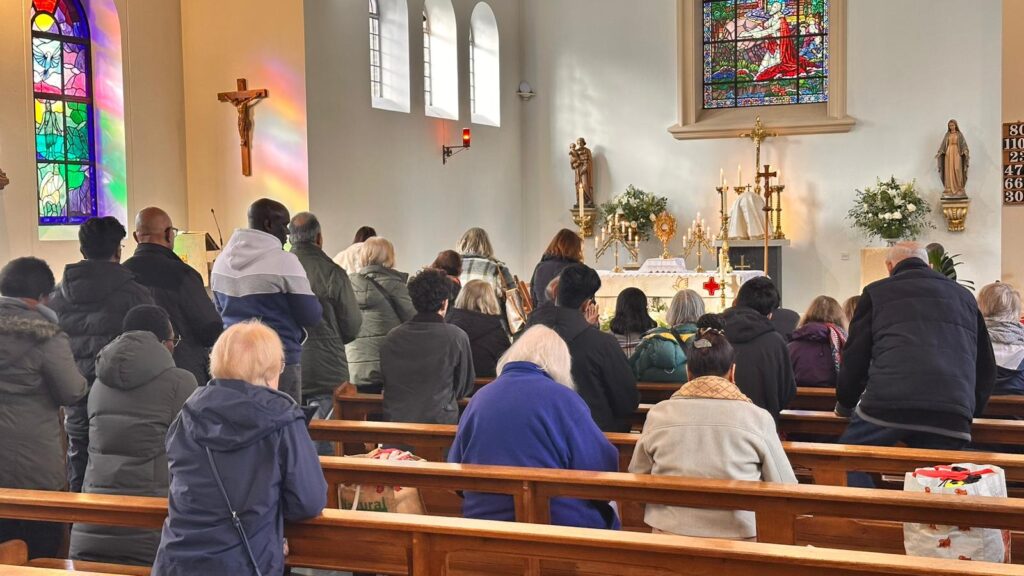
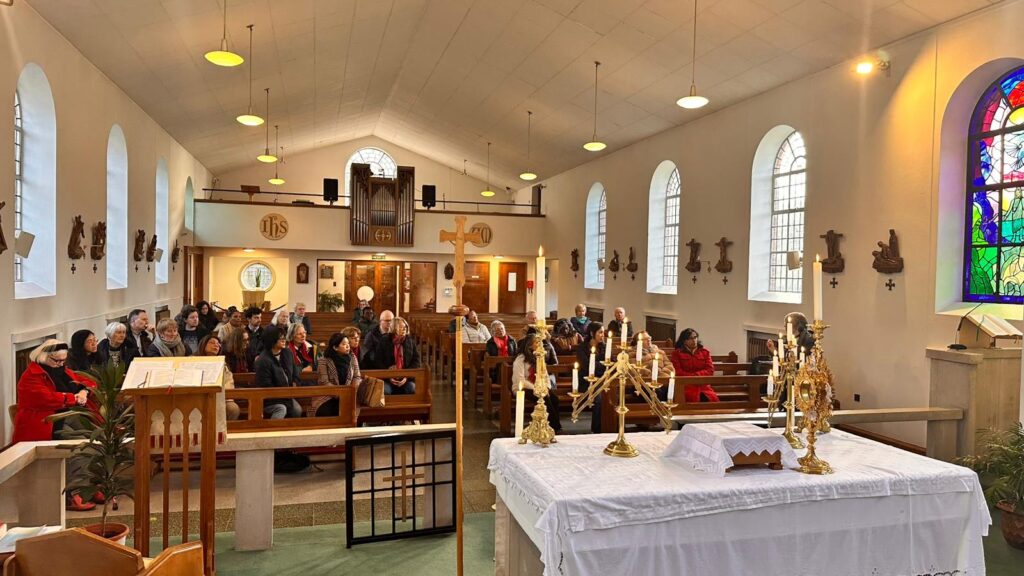
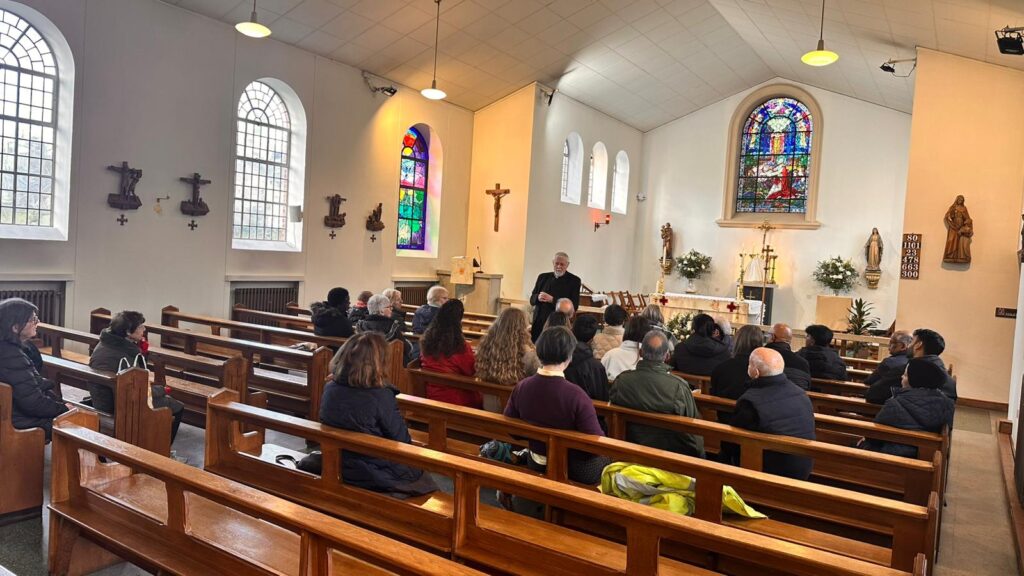
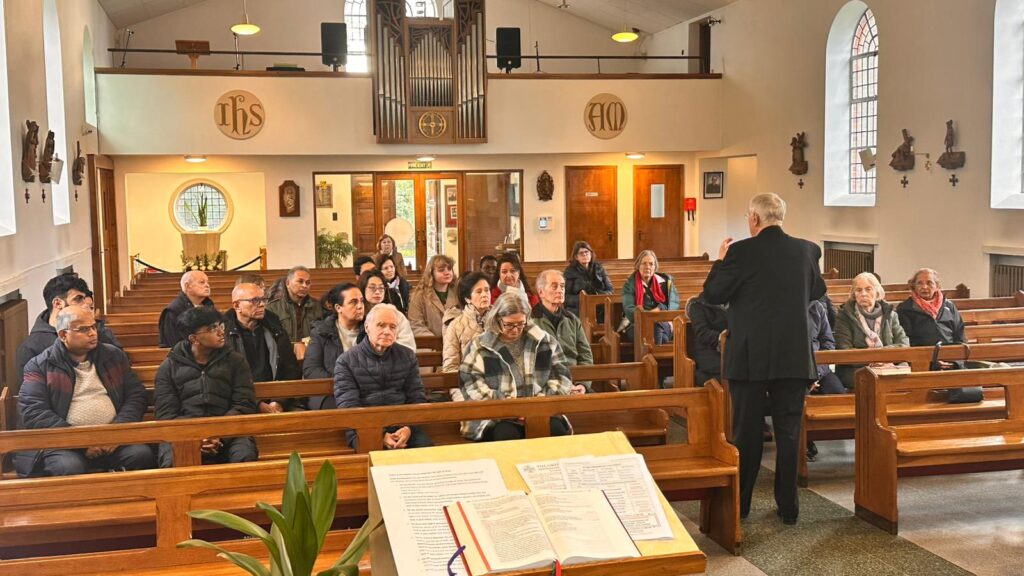
St Ann’s Catholic Church, Kingston Hill was blessed to host a Deanery-level retreat for Readers and Extraordinary Ministers of the Eucharist, bringing together ministers from across the Kingston Deanery for a morning of prayer, formation, and fellowship.
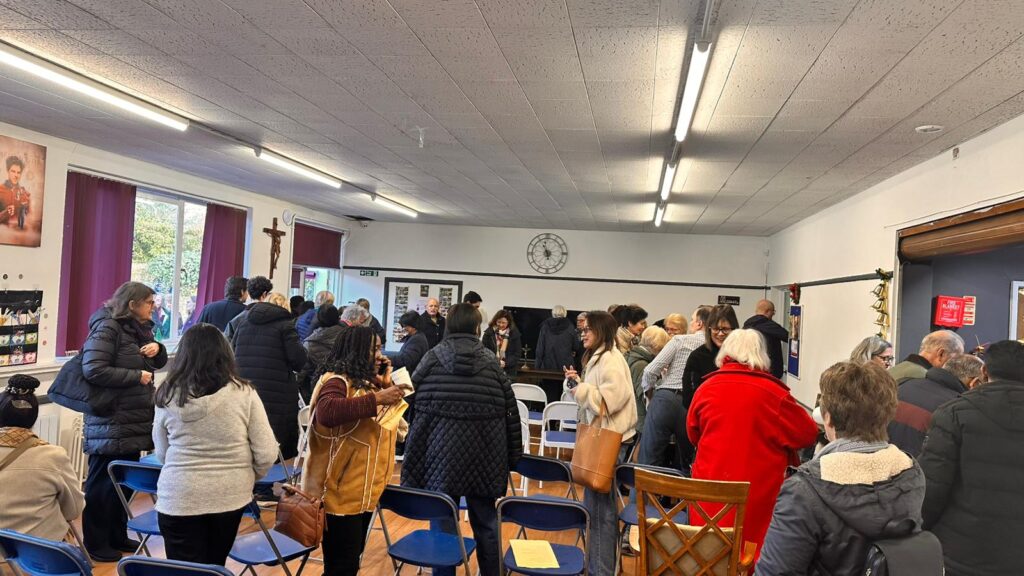
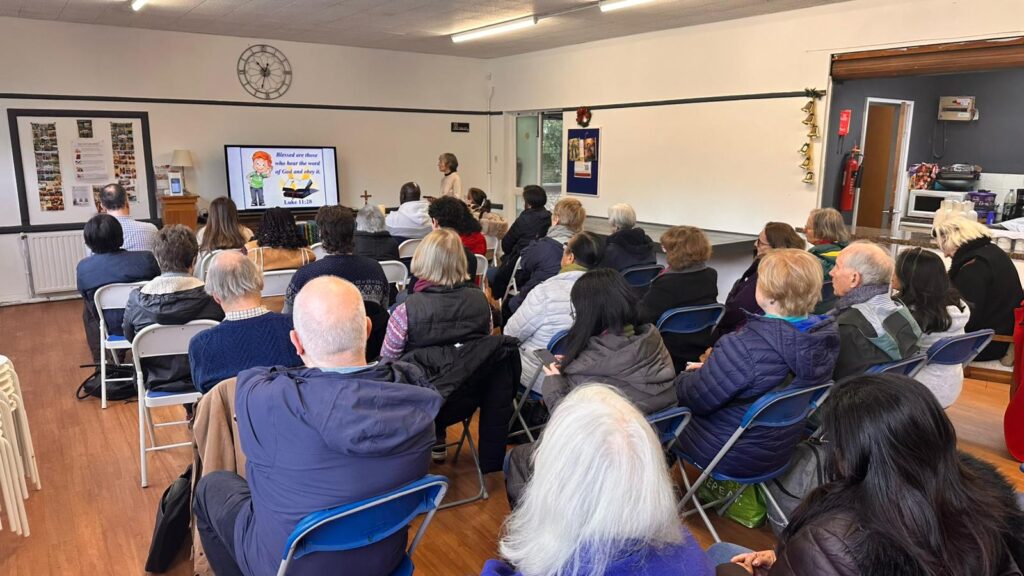
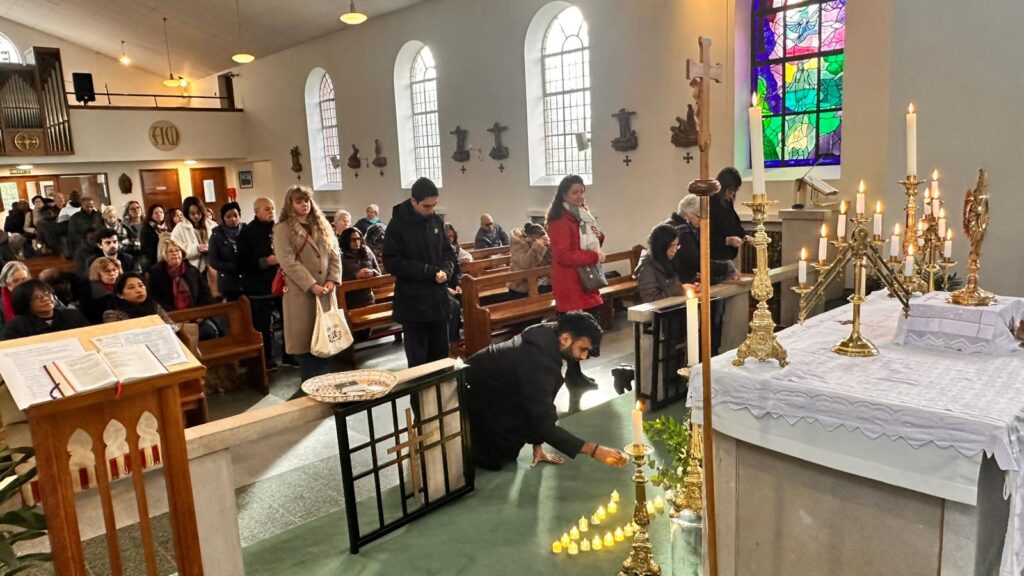
The day began with parallel formation sessions for Readers and Extraordinary Ministers, allowing each ministry to reflect more deeply on its sacred calling. After a shared tea break, the groups exchanged sessions, ensuring a balanced and enriching experience for all. The retreat then moved into a beautiful time of Eucharistic Adoration, culminating in the celebration of Holy Mass together, a powerful sign of unity in service at the altar. Light refreshments afterwards provided an opportunity for warm conversation and mutual encouragement.
The sessions were led by Father Jeffrey, Father Bonaventure, and Sister Margaret, whose guidance and reflections were deeply appreciated by all participants. The retreat was very well attended, and the atmosphere throughout the day was one of joy, reverence, and renewal.
We give thanks for the generosity of all who took part and for the spirit of collaboration within our Deanery, as we continue to serve Christ faithfully through our ministries.
Guided Meditation – “From the Road, to the Table, to the Light”
(Luke 24:13–35)
Let us become still.
Gently place ourselves in the presence of the Lord,
truly present before us in the Eucharist.
No need to rush.
No need to carry anything else.
Just be here.
Take a slow breath in…
and gently breathe out.
Imagine the road to Emmaus.
A simple road.
An ordinary walk.
Two disciples walking side by side.
They are not teaching.
They are not ministering.
They are simply walking — carrying disappointment, confusion, unanswered questions.
And Jesus draws near.
Not dramatically.
Not loudly.
He simply walks with them.
So often, this is how the Lord comes to us —
quietly, patiently, faithfully.
As Eucharistic Ministers and Readers,
we too walk with people.
We walk with their joys, their doubts, their silent sorrows.
And many times, like those disciples,
we do not recognise Him —
because grief clouds vision,
routine dulls wonder,
and familiarity blinds the heart.
Yet…
He is walking with us.
Jesus begins to speak.
He opens the Scriptures.
He explains the Word.
Not to impress,
but to reveal.
Later the disciples would say:
“Were not our hearts burning within us while he spoke to us on the road and opened the Scriptures to us?”
This is the Liturgy of the Word.
The Word of God is not information —
it is transformation.
Scripture tells us that the Word is living and active,
sharper than a two-edged sword,
and that it is a lamp for our feet and a light for our path.
Every time you proclaim the Word…
every time you prepare a reading…
every time Scripture is broken open for God’s people…
Christ Himself is speaking.
You are not just reading words.
You are kindling fire.
You are lighting lamps.
You are allowing hearts to burn again.
Pause here.
Ask quietly in your heart:
Lord, does Your Word still burn within me?
The journey continues.
They arrive at their destination.
The day is ending.
They sit at table.
And something sacred happens.
Jesus takes bread.
He blesses it.
He breaks it.
He gives it.
And suddenly —
their eyes are opened.
This is the Liturgy of the Eucharist.
The same Jesus who spoke on the road
now gives Himself completely.
So often, we do not recognise Him —
because our eyes are clouded
by our own prejudices,
our tiredness,
our disappointments,
our wounds.
But in the breaking of the Bread,
illusion falls away.
Truth is revealed.
The Eucharist does not merely comfort us —
it clarifies us.
It opens our eyes to see God,
to see others,
to see ourselves as we truly are.
As Eucharistic Ministers,
when you hold the Body of Christ,
you hold the One who opens eyes.
When you say, “The Body of Christ,”
you are not only offering Communion —
you are offering encounter,
healing,
and light.
Pause again.
Ask gently:
Lord, what are You opening my eyes to today?
Emmaus teaches us this sacred rhythm:
First — the Word,
which sets the heart on fire.
Then — the Bread,
which opens the eyes.
This is the Mass.
This is our ministry.
This is our calling.
We are not performers.
We are companions on the road.
Servants of the Word.
Bearers of the Bread.
And the story does not end at the table.
Once their hearts were burning
and their eyes were opened,
the disciples did not remain seated.
They rose.
They turned back.
They became witnesses.
In a moment, we will receive a lighted candle.
This candle is not a symbol of ourselves —
it is a sign of Christ within us.
It reminds us that the Word has spoken —
and our hearts have burned.
It reminds us that the Bread has been broken —
and our eyes have been opened.
As you receive your candle,
do so slowly and prayerfully.
Let the flame remind you:
Christ walks with you.
Christ speaks through you.
Christ is carried by you to others.
As we process together,
we walk as the disciples once did —
not alone,
not in fear,
but with purpose.
From the road…
to the table…
to the mission.
Walk gently.
Walk prayerfully.
Carry the light with reverence.
And quietly, in your heart, pray:
“Stay with us, Lord,
for it is nearly evening —
and the light of Your presence is our hope.”
Let us now begin our procession,
as people whose hearts are burning,
whose eyes are opened,
and who carry the light of Christ into the world.
Homily : “Create in Me a Clean Heart, O Lord”
Dear brothers and sisters,
Today’s reading brings before us King David — not at his strongest, not at his most heroic, but at his most human.
David, the man after God’s own heart…
David, the chosen king…
David, the singer of psalms…
And yet today, David stands before us as a sinner.
He does not deny it.
He does not explain it away.
He does not blame circumstances.
He simply says:
“I have sinned against the Lord.”
And from that broken place is born one of the most beautiful prayers ever written:
“Have mercy on me, O God, in your steadfast love…
Create in me a clean heart, O God, and renew a right spirit within me.” (Psalm 51)
But before David reaches repentance, look at the journey he takes.
One sin never stays alone.
One lie never travels light.
David commits adultery — and immediately fear enters.
Fear demands cover-up.
Cover-up demands manipulation.
Manipulation demands cruelty.
He calls Uriah home.
He urges him to sleep with his wife — not out of kindness, but calculation.
When that fails, David goes lower.
He sends Uriah to the front line, knowing what will happen.
One sin breeds another.
One lie gives birth to a thousand lies.
And something far more dangerous happens —
David loses credibility.
Not only before God,
but before his people,
before his soldiers,
before those closest to him.
From that moment on, the unspoken message is clear:
If the king can do this, why not us?
Dear brothers and sisters,
leaders don’t only lead by words —
they lead by example.
Parents lead their children this way.
Husbands and wives lead each other this way.
Priests, ministers, readers — all of us — lead this way.
Children see more than we think.
Families know more than we assume.
Communities sense more than we admit.
David may have thought, “No one knows.”
But everyone knew — at least in their hearts.
And that is the tragedy of living a false life:
it drains energy,
it fractures trust,
it destroys peace.
To maintain a lie, you need memory.
To maintain an image, you need performance.
To maintain deception, you need constant effort.
But sincerity?
Sincerity is simple.
Sometimes people say, “It’s hard to live honestly.”
No — it is hard to live dishonestly.
Honesty frees you.
Truth gives you rest.
Confession restores dignity.
That is why David’s greatness is not that he never fell —
but that he finally stopped pretending.
“A broken and contrite heart, O God, you will not despise.” (Psalm 51)
Dear brothers and sisters,
watch your actions.
If you fall, say it.
If you fail, own it.
If you sin, return.
Because repentance restores credibility.
Truth heals relationships.
And sincerity makes the journey lighter.
May our prayer today be simple and real:
Create in us a clean heart, O Lord.
Renew a right spirit within us.
And give us the courage to live truthfully — before You and before one another.